
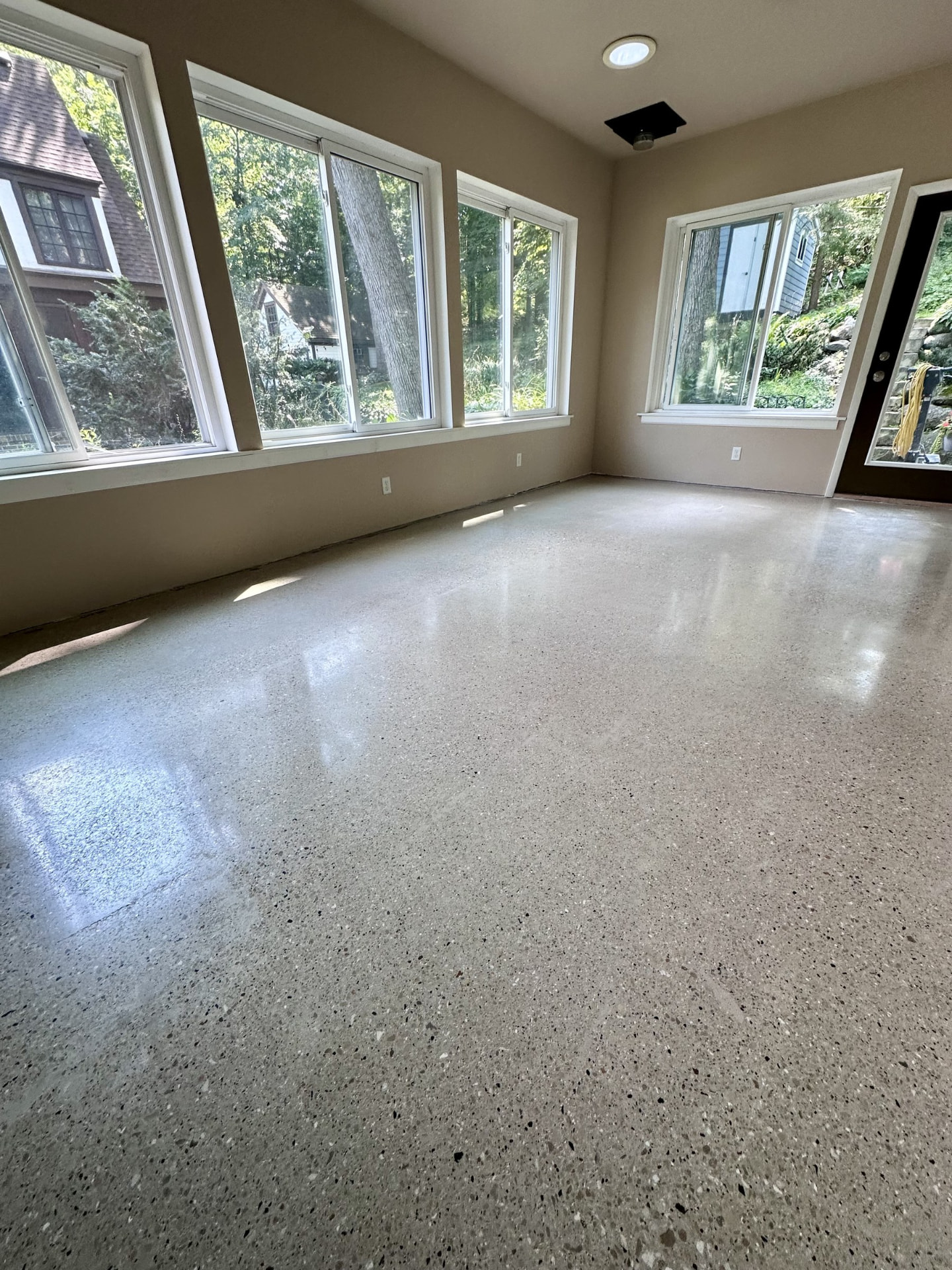
The case for it
Every other basement flooring option means installing something on top of a slab that's already there — and in a below-grade room, anything you add is one more thing that can trap moisture or hold odor. Polishing finishes the surface you have instead.
You also get light back. Basements are usually short on windows, and a polished floor bounces what light there is around the room rather than absorbing it.
Moisture: the thing to get right first
Below-grade slabs pass water vapor upward — that's normal. The trouble starts when a floor finish blocks it. Trapped vapor is what lifts glued-down flooring, curls vinyl and delaminates coatings.
Polished concrete doesn't create that trap, which is exactly why it works well in basements. What it can't do is fix an active water problem. If you get standing water in a hard rain, or there's a drainage or grading issue outside, address that first — a beautiful floor won't stop water coming in. We'll flag what we see when we walk the space.
Comfort, warmth and sound
Straight answer: concrete is hard and it isn't warm underfoot. In practice most people solve that with area rugs in seating zones, and slippers or mats where they stand. If the basement is a media room or a playroom, plan for rugs from the start.
Concrete also reflects sound, so a big open basement can get echoey. Rugs, soft furniture and wall treatments handle it. If it's going to be a home theater, tell us — it changes what sheen we'd recommend.
One real advantage: polished concrete pairs well with in-floor heat where it exists, because there's no insulating layer between the heat and the room.
Dust, allergens and pets
This is the reason a lot of our basement calls happen. Bare concrete sheds fine dust continuously; carpet holds dander, mildew and everything a wet dog brings downstairs. A polished slab has no pile, no seams and no gaps — there's nowhere for any of it to collect, and cleanup is a damp mop.
If there's carpet, tile or glue down there now
Almost every basement we polish had something else on it first. Removing carpet, tack strip, tile, thin set and old adhesive is normal work — we grind the slab back to clean concrete before anything else happens.
What to expect once it's up: the slab underneath is usually less pretty than people imagine. Adhesive shadows, patched plumbing trenches, control joints and color variation are all common. Some of that grinds out, some becomes part of the character of the floor, and some gets repaired. We'll show you the slab and tell you honestly what it can become before you commit to a finish level.
Cracks, joints and the pipe trench
Basement slabs crack, and most have a saw-cut trench where plumbing was run. We repair cracks and divots using proper methods rather than a surface patch, and joints get filled so they stop collecting dirt. Repaired areas read as repaired — the goal is a floor that looks deliberate and stops deteriorating, not one that pretends nothing ever happened.
So — good idea or not?
Yes, if the slab is sound and dry, you want a low-maintenance room, and you're comfortable with the natural variation of real concrete. Rethink it if you have unresolved water intrusion, or if wall-to-wall softness underfoot is non-negotiable.
Working out what your slab is capable of is a 20-minute walkthrough. What drives the cost covers what changes the number once we're down there.
Want an honest read on your floor?
Tell us about the space and we'll walk you through the options with a straight quote — no hidden fees. We serve Wisconsin, Northern Illinois and Eastern Iowa.
More guides
- Polished concrete vs epoxy floors: which is right for your space?
Durability, looks, repairs, moisture and lifespan compared — plus when a coating really is the better call.
- What does polished concrete cost in Wisconsin?
The six things that move the price up or down, and what a walkthrough tells us that a phone estimate can't.
- Polished concrete garage floors: pros, cons and what to expect
Salt, hot tires, oil and pops — how a polished garage slab holds up through a Wisconsin winter.