
Why nobody should price your floor over the phone
Polishing is priced on condition, not just square footage. Two garages of identical size can be very different jobs: one needs a light grind and polish, the other needs a failed coating removed, a dozen pops filled and cracks repaired before polishing can even start.
A contractor who gives you a firm number without seeing the slab is either padding it heavily or setting up a change order later. We'd rather look first and give you a quote that holds.
The six things that drive the price
1. Condition of the slab
This is the biggest single factor. A clean, sound, reasonably flat slab is the least expensive floor we can polish. Every problem on top of that — spalling, old patches, uneven pours, trowel marks — adds grinding time.
2. What has to come off first
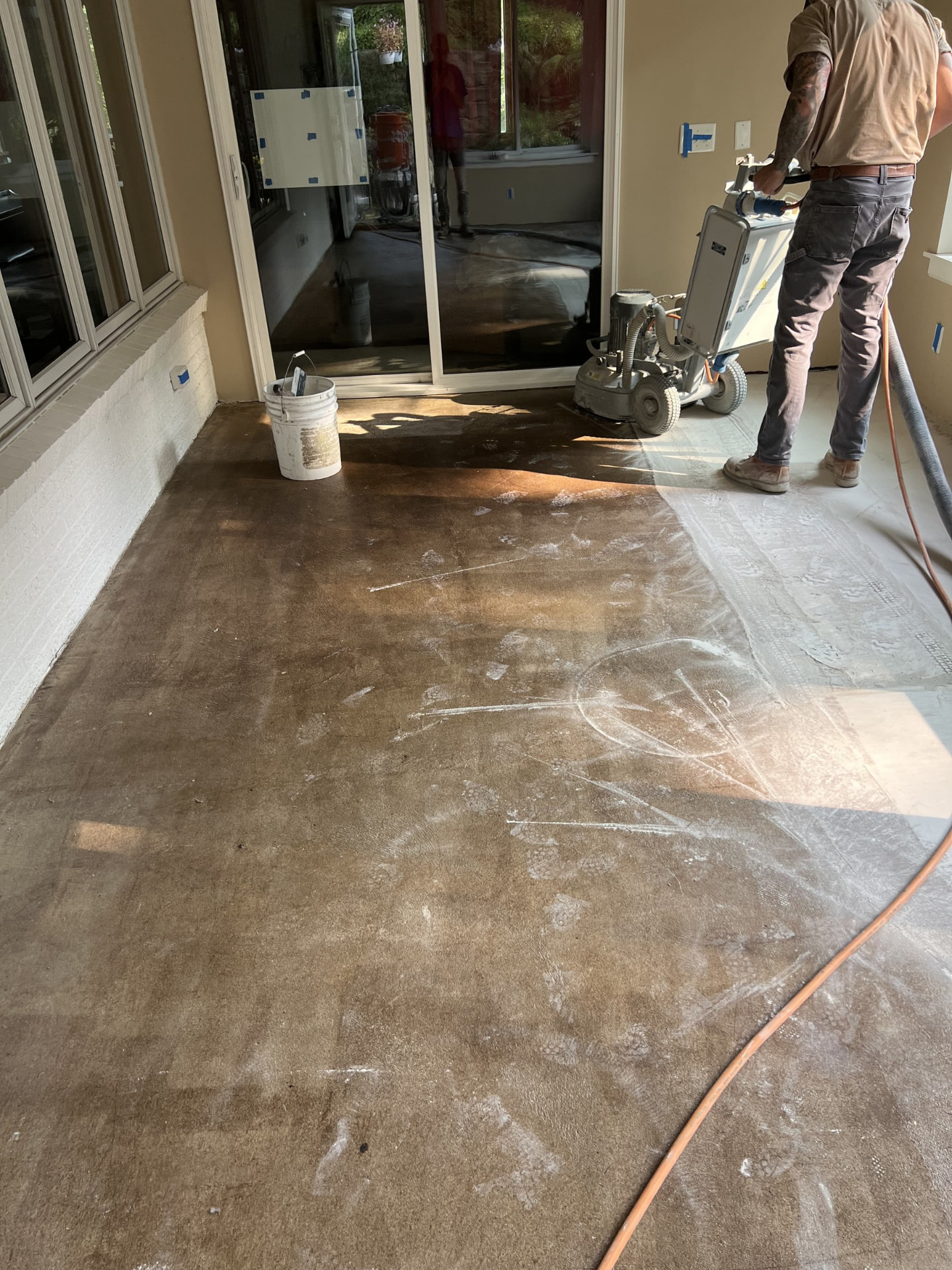
Carpet glue, thin set, failed epoxy, paint and tile mortar all have to be ground away before polishing. Removal is real labor and it wears tooling, so a floor with three previous lives costs more than bare concrete.
3. Crack and divot repair
Concrete cracks — that's a given. Repairing it properly rather than smearing a patch over it takes materials and time, and it's the part that decides whether the finished floor looks intentional or repaired. Heavily cracked slabs add the most here.
4. Level of shine and aggregate exposure
A satin, low-sheen finish takes fewer passes than a high-gloss floor with exposed aggregate. Each additional grit step is another full pass over the whole area, so the finish you choose changes the labor directly.
5. Square footage and layout
Bigger areas cost less per square foot — the machines are already on site and running. Layout works the other way: closets, tight corners, stairs, columns and doorways all need hand or edge work, which is slower than open floor. A 600 sq ft open basement is a cheaper job than 600 sq ft chopped into five rooms.
6. Access and site conditions
Our equipment is commercial-grade, which means it needs a way in, adequate power and somewhere for dust extraction. Basements with narrow stairs, occupied businesses that need off-hours work, and unheated winter jobs all affect scheduling and cost.
Small garage vs full basement: what's different
A two-car garage is usually a straightforward job: prep, repair pops and cracks, grind, polish. The complications are typically old coatings and slab damage near the door where salt and water collect.
A full basement brings more variables. Old carpet, tile or glue often has to be removed, walls and mechanicals mean more edge work, and moisture in the slab needs to be understood before we commit to a finish. It's still one of the best-value floors in the house, because you're finishing a surface you already paid for instead of buying a new one.
What you get in a quote from us
- A walkthrough of the actual slab, not an estimate from a photo.
- What we'd repair and why, before any polishing.
- The finish level we recommend for how the room gets used.
- An honest timeline, and how we'd work around an occupied space.
- One price with no hidden fees, backed by a written guarantee.
How to compare quotes fairly
If you're getting more than one bid — and you should — check that each one covers the same scope. Ask specifically: does the price include removing what's on the floor now, does it include crack and divot repair, and what level of polish is quoted? A cheaper number that skips prep isn't cheaper; prep is what decides how the finished floor turns out.
Also compare what happens in five years. A polished floor gets maintained; a coated floor gets recoated. Our polished concrete vs epoxy guide breaks that down.
Ready for a real number?
Send us the room, the rough size and what's on the floor now, and we'll set up a walkthrough. You'll get a straight quote for your slab rather than an average for somebody else's.
Want an honest read on your floor?
Tell us about the space and we'll walk you through the options with a straight quote — no hidden fees. We serve Wisconsin, Northern Illinois and Eastern Iowa.
More guides
- Polished concrete vs epoxy floors: which is right for your space?
Durability, looks, repairs, moisture and lifespan compared — plus when a coating really is the better call.
- Polished concrete garage floors: pros, cons and what to expect
Salt, hot tires, oil and pops — how a polished garage slab holds up through a Wisconsin winter.
- Polished concrete basement floors: is it a good idea?
Moisture, comfort, old glue and tile removal, and why finished basements stay cleaner without carpet.