
The basic difference
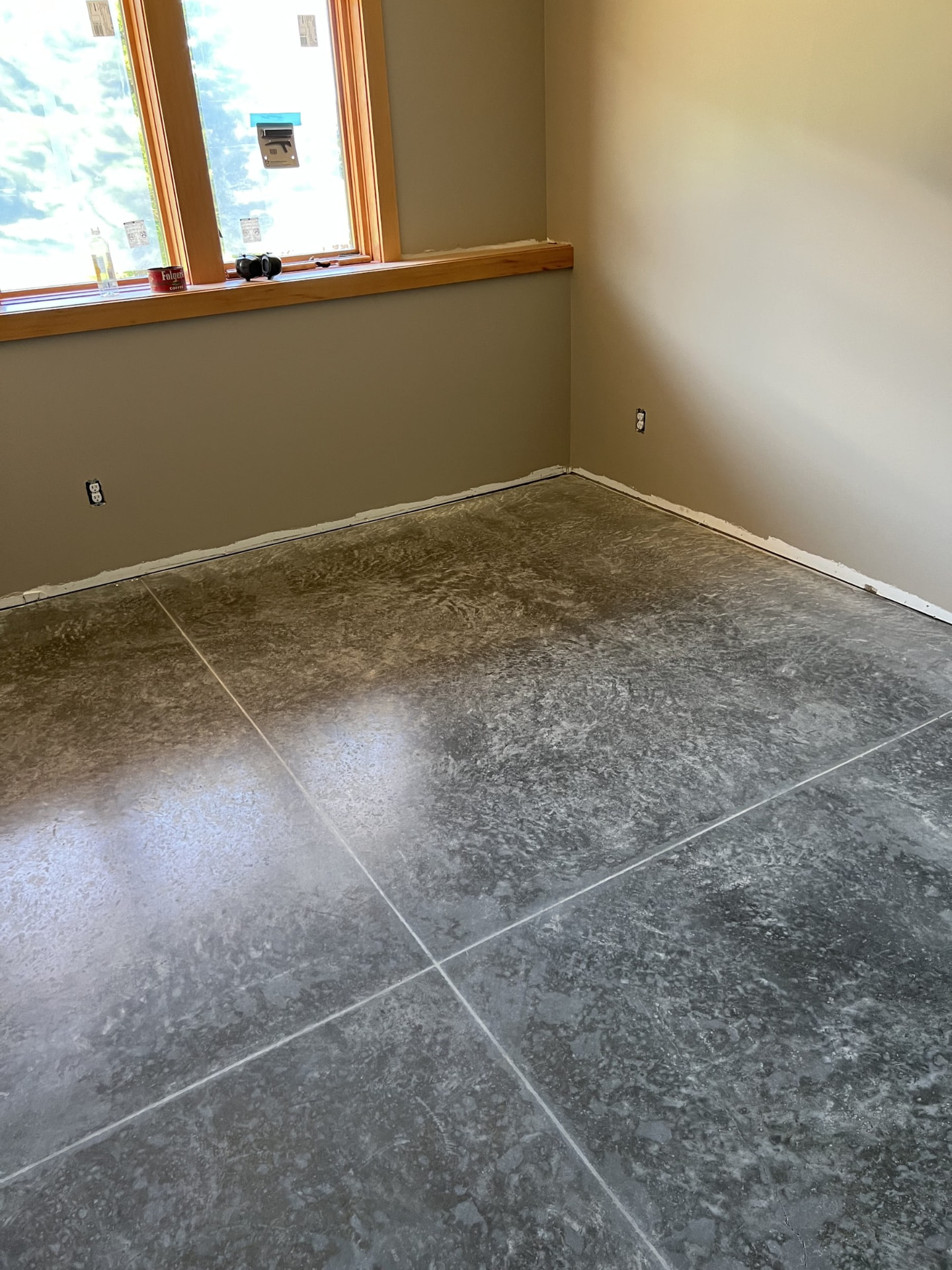
Polishing is a mechanical process. We grind the existing slab with progressively finer diamond tooling until the concrete itself becomes hard, smooth and reflective. Nothing is added on top — the floor you end up with is the floor that was already there.
Epoxy is a coating. A resin is mixed and spread over the prepared slab, curing into a separate layer that sits on the concrete. That layer is what you see, walk on and eventually have to maintain.
Worth knowing: a big share of the epoxy floors we're called out to look at are being removed, not installed. Grinding off failed coatings is one of our most common jobs.
Side by side
| What matters | Polished concrete | Epoxy coating |
|---|---|---|
| What you're walking on | The slab itself, hardened and refined | A resin layer bonded to the slab |
| Failure mode | Loses shine slowly; can be re-polished in place | Peels, bubbles or chips; usually has to come off and be redone |
| Moisture from below | Breathes — vapor moving through the slab has nowhere to lift | Sensitive; trapped vapor is a leading cause of delamination |
| Repairs | Cracks and divots repaired, then blended into the finish | Patches in a coating tend to show as a different sheen |
| Look | Natural stone-like variation; matte to high gloss, aggregate exposed as much or little as you want | Uniform color, solid or flake; hides the concrete entirely |
| Maintenance | Dust mop and damp mop; no recoating cycle | Recoat on a schedule to keep it looking new |
| Downtime | Walkable the same day the polishing wraps in most cases | Cure time between coats before the room goes back into use |
When epoxy is genuinely the better call
We're a polishing company, and we'll still tell you when a coating makes more sense:
- You need a specific solid color — a shop floor with safety markings, or a space that has to match a brand palette.
- You need a chemically resistant, fully non-porous surface, like a lab or a wash-down area.
- The slab is too far gone to finish attractively — heavily spalled, patched in a dozen colors, or poured over with something that won't come clean.
When polishing wins
- The slab is structurally sound and you want to stop adding layers to it. Most basements, garages, porches, showrooms and new-construction floors fall here.
- You want a finish you don't have to re-do. Wear on a polished floor is gradual and correctable, not a peel-and-replace event.
- Dust and allergens matter. There's no seam, no pile and no gap for anything to collect in.
- You have moisture in the slab. Polishing doesn't trap vapor, so you're not fighting physics.
Already have epoxy on the floor?
That doesn't rule polishing out. Removing failed epoxy, carpet glue and thin set is routine work for us — we grind the slab back to clean concrete, repair what's under there, and then decide together how far to take the polish. See our grinding and floor prep services for what that involves.
How to decide in one question
Ask yourself whether you want to change what the floor is or change what's on it. If the concrete underneath is worth showing, polishing costs you less over the life of the floor and never comes to a re-coating day. If you need a color or a chemical barrier the concrete can't provide, a coating is doing a job polishing can't.
Not sure which camp your slab is in? That's exactly what a walkthrough settles — we'll look at the concrete, tell you honestly what it can become, and you decide from there.
Want an honest read on your floor?
Tell us about the space and we'll walk you through the options with a straight quote — no hidden fees. We serve Wisconsin, Northern Illinois and Eastern Iowa.
More guides
- What does polished concrete cost in Wisconsin?
The six things that move the price up or down, and what a walkthrough tells us that a phone estimate can't.
- Polished concrete garage floors: pros, cons and what to expect
Salt, hot tires, oil and pops — how a polished garage slab holds up through a Wisconsin winter.
- Polished concrete basement floors: is it a good idea?
Moisture, comfort, old glue and tile removal, and why finished basements stay cleaner without carpet.