
Why garages suit polishing
A garage slab is already the finished surface — it's just untreated. Polishing hardens and closes the surface so it stops shedding dust, stops soaking up oil and drips, and starts cleaning up with a mop instead of a broom and a shrug.
It also brightens the space dramatically. A polished floor reflects whatever light you have instead of swallowing it, which makes a single-bulb garage feel like a workshop.
The Wisconsin problem: salt and meltwater
Road salt is what destroys garage floors here. Cars carry brine in, it melts off, and it sits in the pores of bare concrete through freeze-thaw cycles. That's what causes the flaking and pitting you see near the door on older slabs.
Polishing plus a proper sealer closes that surface up so the brine has far less to soak into, and what does land wipes up. It isn't magic — you should still hose or mop the front bay off periodically in winter — but it stops the slow chemical erosion that ruins an untreated floor.
Hot tires, oil and dropped tools
- Hot tires. Tire pickup is a coating failure — the resin softens and lifts with the tire. There's no coating to lift on a polished floor, so it isn't a failure mode you have to think about.
- Oil and fluids. A polished and sealed surface buys you time. Wipe a spill and you're fine; leave a drip pan leaking for a month and you can still get a shadow. Bare concrete stains almost instantly by comparison.
- Dropped tools and equipment. Concrete is concrete — a heavy impact can still divot it. The advantage is repairability: we fill and refinish a divot, and it blends. A chipped coating usually means a visible patch or a recoat.
The honest cons
- It's hard and cold. It's concrete. If you spend hours standing at a bench, put a mat down.
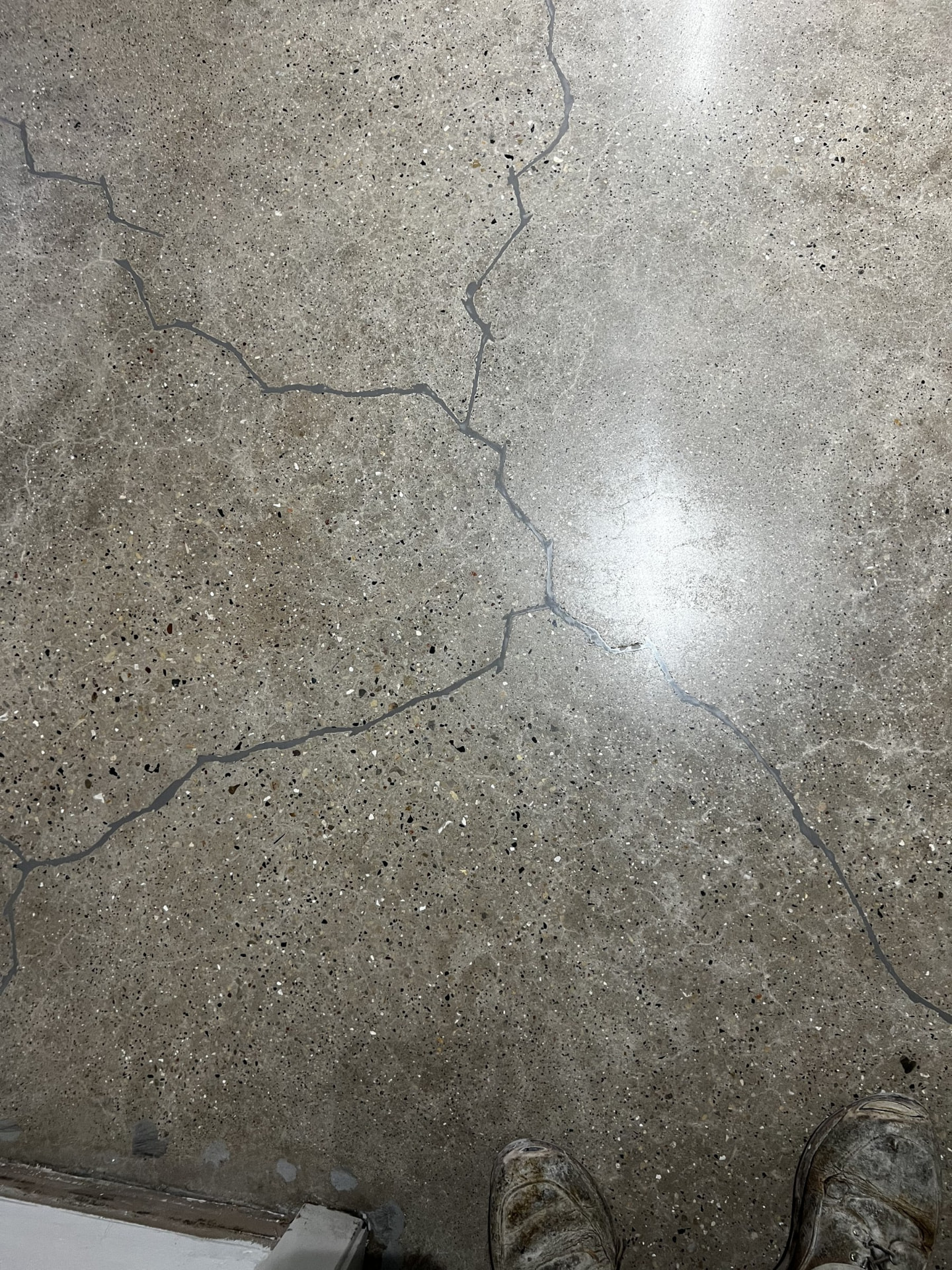
- Existing cracks stay part of the story. We repair them properly, and they read as a repaired crack, not an invisible one. Concrete cracks; anyone promising otherwise is overselling.
- It can be slick when wet. Manageable with the right sheen level and sealer — we'll steer you away from mirror gloss in a bay that sees snowmelt.
- A badly damaged slab has limits. If the surface is severely spalled across the whole floor, polishing may not be the right answer, and we'll say so.
What the work actually looks like
- Clear the garage and we set up dust extraction.
- Remove what's on the slab — old paint, sealer, failed epoxy — and grind out trip hazards.
- Repair cracks, pops and divots so the finish has something sound to sit on.
- Grind through progressively finer diamond steps to the agreed sheen.
- Apply sealer and let it set before vehicles come back in.
Most single- and two-car garages are a matter of days, not weeks. The variable is almost always how much repair and removal comes before the polishing. You can see the stages on our process section.
Keeping it looking right
- Dust mop or blow it out; grit is what dulls a floor over time.
- Damp mop with a pH-neutral cleaner — no harsh acids.
- Rinse the front bay after a salty stretch of winter.
- Wipe fluid spills rather than letting them sit.
There's no annual recoat on the calendar. When the shine eventually softens in traffic lanes, a floor can be re-polished in place.
Is your garage a good candidate?
Nearly all sound slabs are. The ones worth a conversation first are heavily spalled floors, slabs with active moisture problems, and additions where the pour was rough. Send us a couple of photos of the worst area and we'll tell you straight whether polishing is the right move — and if it isn't, what is. Curious what it costs? Start with our Wisconsin cost guide.
Want an honest read on your floor?
Tell us about the space and we'll walk you through the options with a straight quote — no hidden fees. We serve Wisconsin, Northern Illinois and Eastern Iowa.
More guides
- Polished concrete vs epoxy floors: which is right for your space?
Durability, looks, repairs, moisture and lifespan compared — plus when a coating really is the better call.
- What does polished concrete cost in Wisconsin?
The six things that move the price up or down, and what a walkthrough tells us that a phone estimate can't.
- Polished concrete basement floors: is it a good idea?
Moisture, comfort, old glue and tile removal, and why finished basements stay cleaner without carpet.